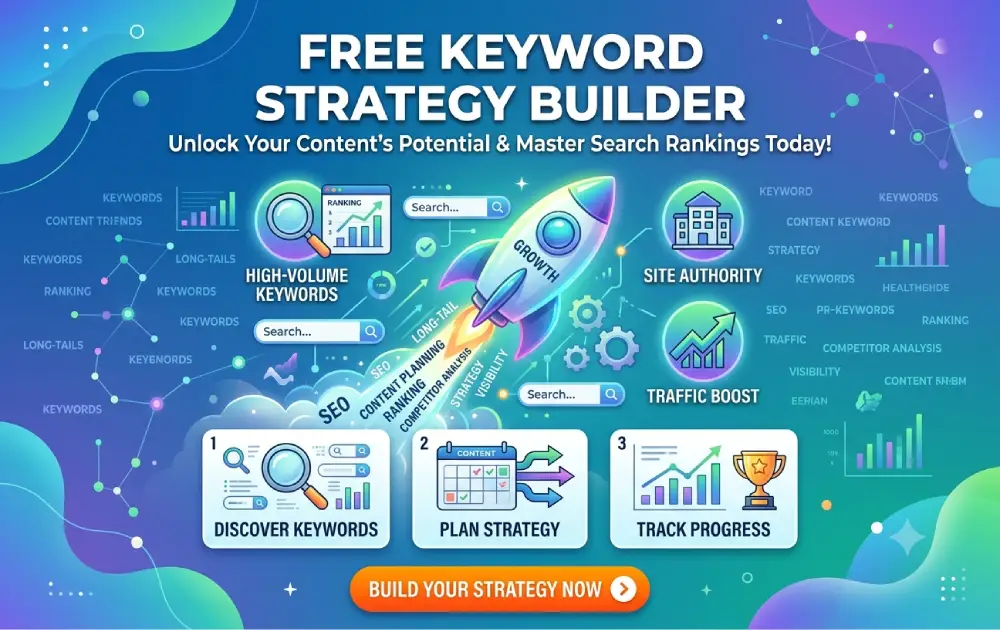
Having a long list of keywords isn’t the same as having a strategy. Most people finish keyword research with a spreadsheet full of terms and no clear idea of which ones belong on the same page, which deserve their own article, or which order to tackle them in. The Free Keyword Strategy Builder solves that step — it takes your raw keywords and organizes them into keyword clusters grouped by search intent, so you walk away with an actual content plan instead of just a list.
What Is Keyword Clustering, and Why Does It Matter?
Keyword clustering is the practice of grouping related search terms that share the same intent so you can target them with a single, well-structured page instead of spreading thin content across dozens of near-duplicate ones. If someone searches “best running shoes,” “top running shoes,” and “running shoe reviews,” they’re all looking for the same kind of answer — so Google typically ranks the same type of page for all three. Writing three separate articles for these terms doesn’t help you rank higher; it usually just creates keyword cannibalization, where your own pages compete against each other in the same search results.
Building clusters manually means checking dozens of SERPs by hand, which is slow and easy to get wrong. The Free Keyword Strategy Builder automates that process, so you can go from a messy keyword export to an organized content map in minutes rather than hours.
How the Free Keyword Strategy Builder Works
- Add your keywords. Paste in a list from your own research, an export from another keyword tool, or terms pulled from our keyword research tool.
- Let the tool group them. Keywords are organized into clusters based on shared topics and intent, so terms that belong on the same page end up together automatically.
- Review the intent labels. Each cluster is tagged by intent — informational, commercial, or transactional — so you know exactly what kind of content each group calls for.
- Prioritize and plan. Use the clusters to decide which topics deserve a dedicated page, which can be merged into existing content, and where internal links should connect them.
Why Grouping Keywords by Intent Changes Your Results
Not every keyword that mentions the same topic wants the same answer. “What is a keyword cluster” calls for an explanation. “Best keyword clustering tools” calls for a comparison. “Keyword strategy builder pricing” signals someone close to a decision. Mixing these into a single page usually satisfies none of them well. When your clusters are separated by search intent, each page can be built around exactly what that group of searchers wants, which tends to hold attention longer and earn better engagement signals — both of which correlate with stronger rankings over time.
From Clusters to a Real Content Strategy
Once your keywords are grouped, the real work becomes straightforward. Each cluster becomes a candidate for one comprehensive page built around a primary keyword and its closely related terms. Larger clusters with clear commercial intent are usually worth prioritizing first, since they tend to have the most direct impact on traffic and conversions. Smaller, informational clusters are useful for supporting content that builds topical authority around your main pages and gives you natural opportunities for internal linking.
This is also the point where it helps to bring in the rest of the Free SEO toolkit — check technical readiness with the website SEO checker, draft accurate titles and descriptions with the SEO meta tag generator, and refresh older pages with the SEO article rewriter once your new structure is live.